What if the heart was never invented as a symbol?
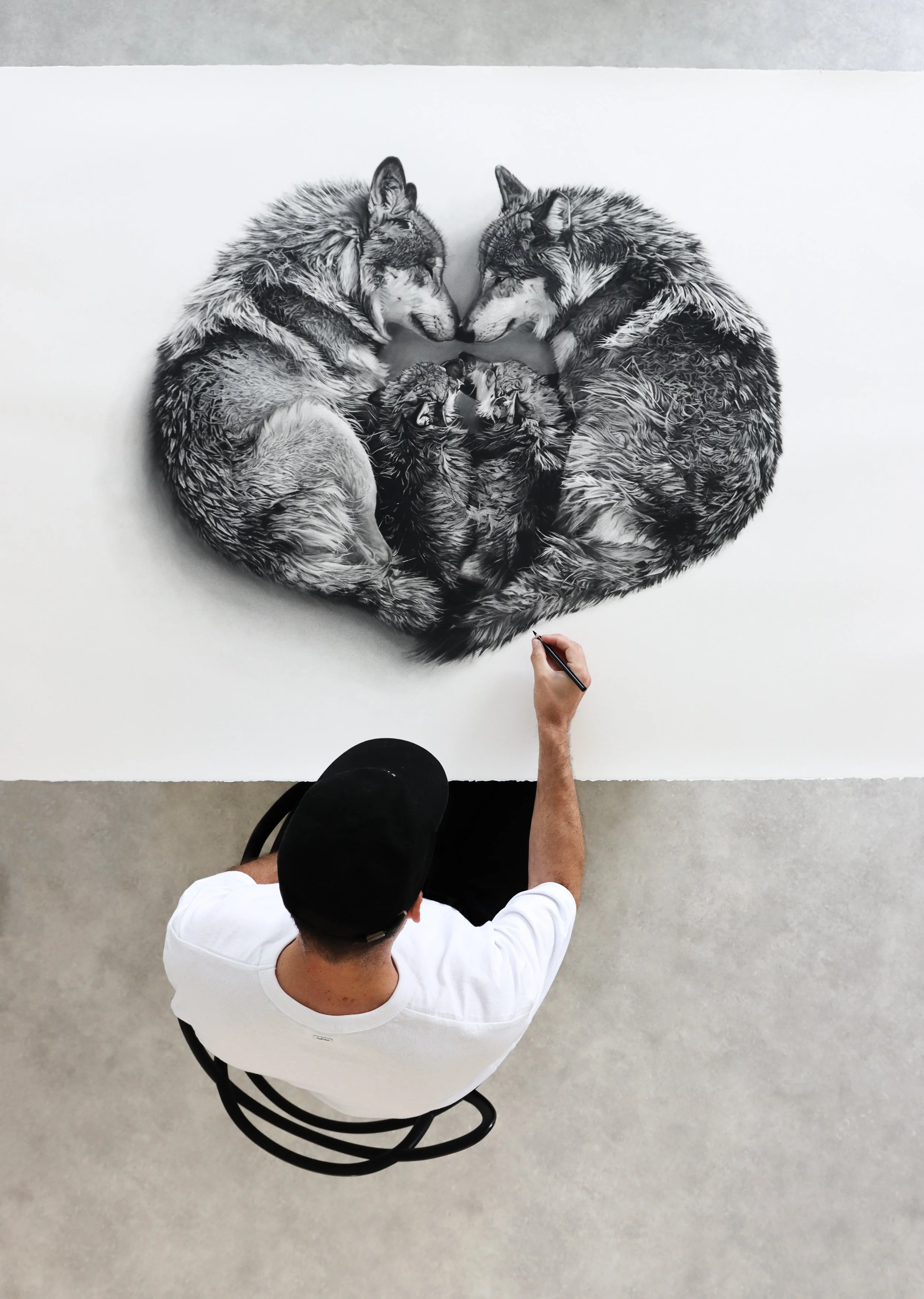
We all recognise the shape.
Two curves meeting at a point. A rounded form at the top, narrowing towards the bottom.
A heart.
We learn its meaning almost before we learn to draw it. It appears on cards, jewellery, clothing, screens and signs. It has become one of the most familiar symbols in the world, used as shorthand for love, affection, connection and belonging.
So familiar, in fact, that we rarely question the symbol itself.
But what if the heart was never invented as a symbol?
What if we simply discovered it in nature?
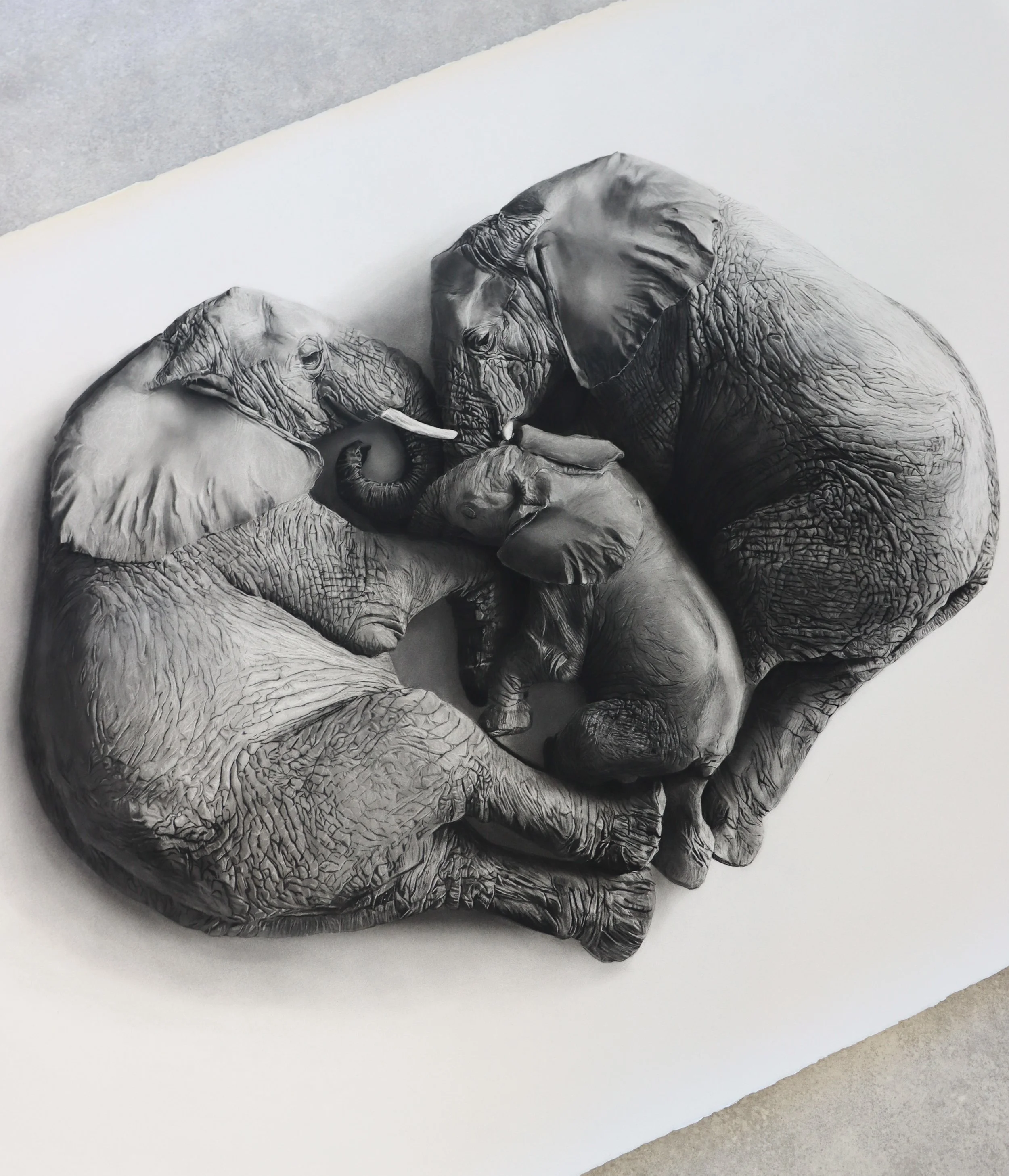
That question became the starting point for Wild Hearts.
I became interested in what happens when animals come together naturally. A mother shelters a young animal. A family gathers close. Two bodies curve towards one another. Limbs overlap. Heads meet. Fur follows the contour of another body.
Nothing is arranged to create a symbol. And yet, from a particular point of view, something begins to appear.
A shape we already know.
A heart.
The important part is that I don’t draw the heart. I draw the animals. The heart emerges from the relationship between them.
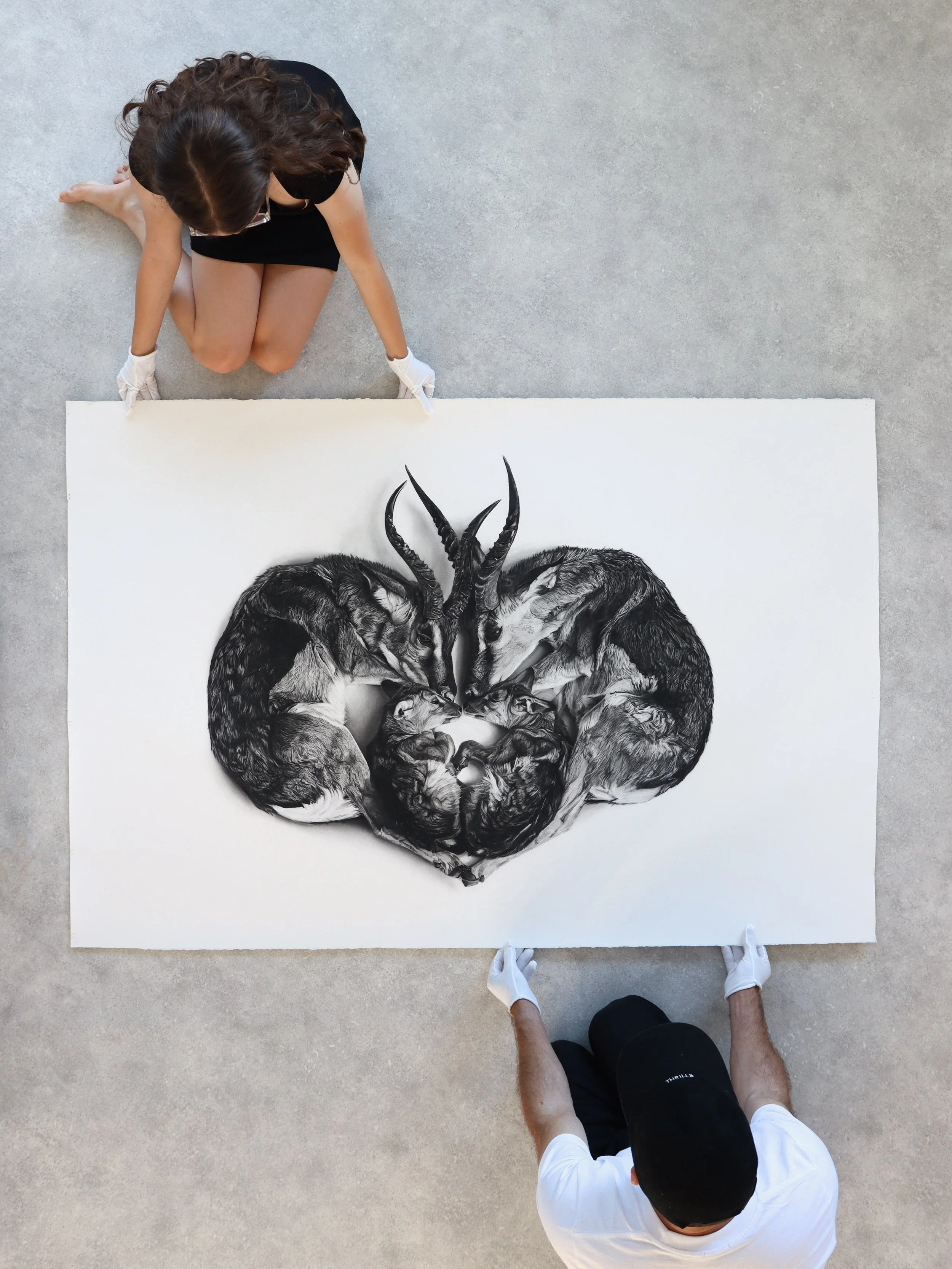
The heart shape has become so culturally familiar that it can carry meaning almost instantly. We don’t need words to understand what it suggests.
But in Wild Hearts, I wanted to move backwards from the symbol. Away from the icon and towards the physical relationships that might have given the idea its emotional power in the first place.
Animals became the natural language for that exploration.
There is no human story that needs to be explained. The relationship itself becomes the subject.
Protection is physical. Belonging is physical. Connection is physical. The animals remain recognisable, but they also become forms. Bodies become architecture. And when those forms come together, something larger begins to emerge.
This distinction matters to me. Wild Hearts is not a series about drawing hearts. If it were, the heart would be the destination.
Instead, it is something discovered along the way. I begin with the animals, their bodies and the idea of how they might exist together. The composition is built around proximity, balance, shelter and connection.
Sometimes the heart becomes immediately visible. Sometimes it is almost hidden. The closer you look, the more the image breaks apart into individual animals, individual bodies and individual marks.
From a distance, they become one. Up close, they separate again. That movement between the individual and the whole is central to the work.
The viewer sees elephants.
Then they see a family.
Then the bodies begin to form a shape.
And somewhere between seeing the animals and recognising the heart, the meaning changes. The heart hasn’t been placed into the image.
It has been found.