Wild Hearts
What if the heart was never invented as a symbol?
What if we simply discovered it in nature?
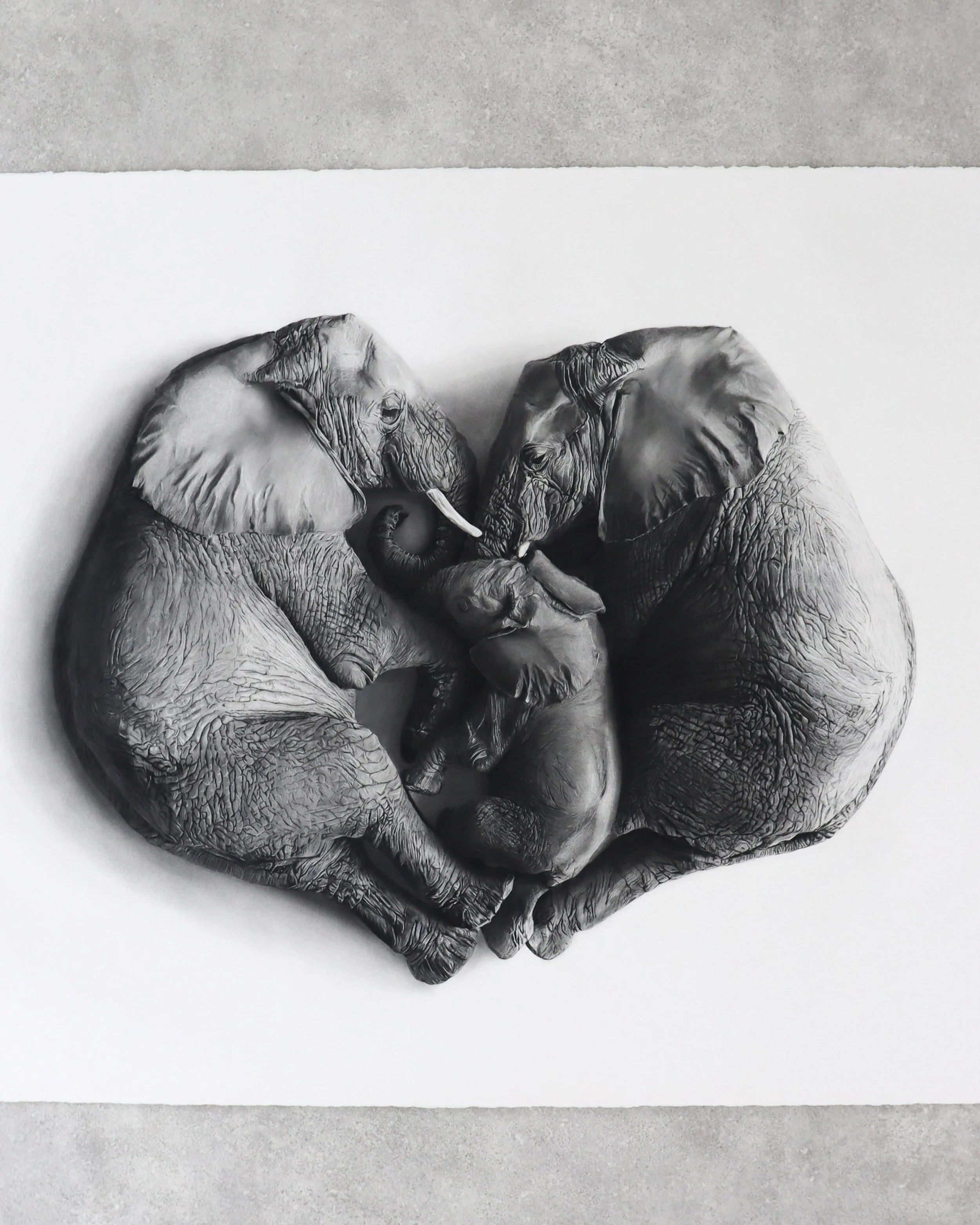
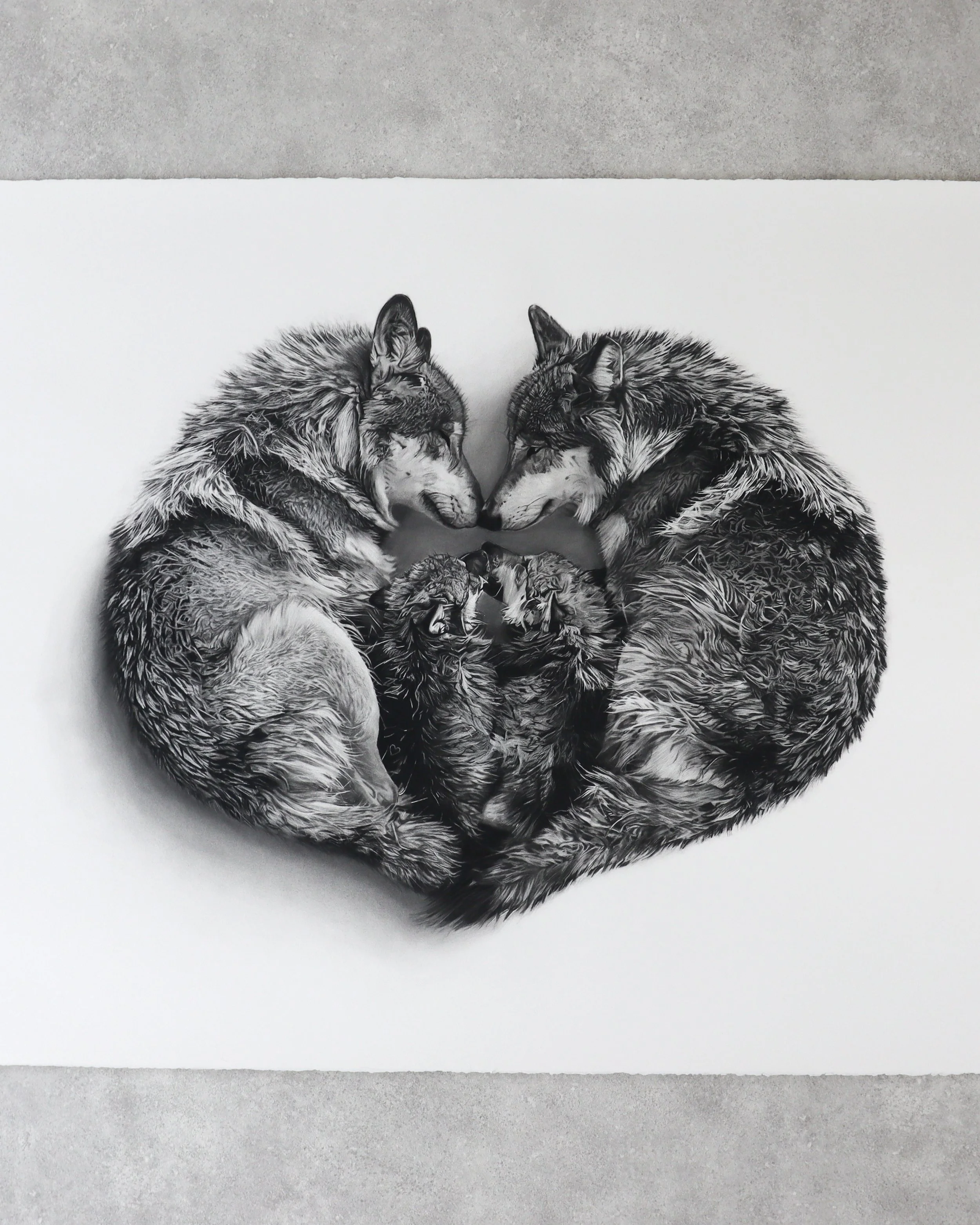
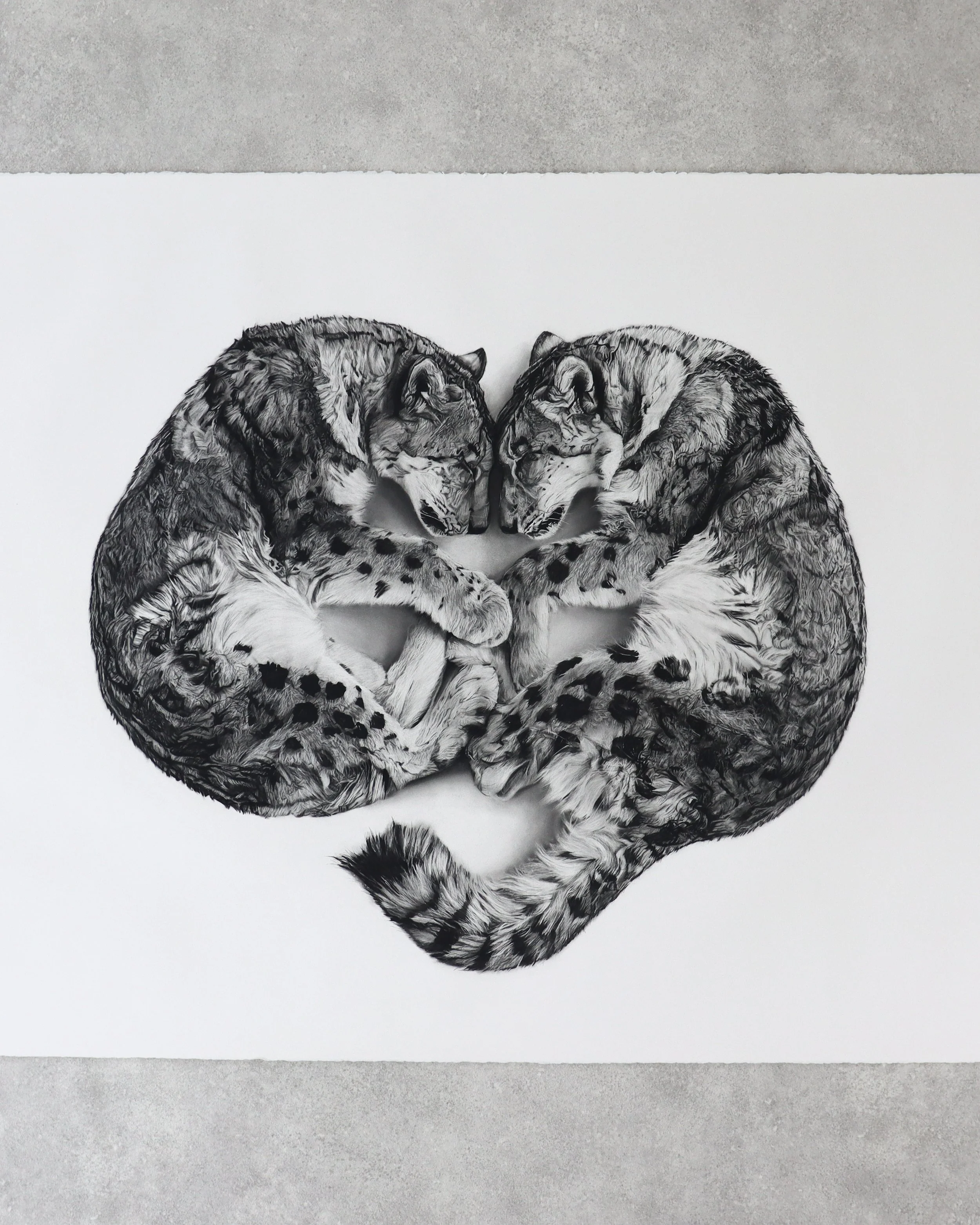
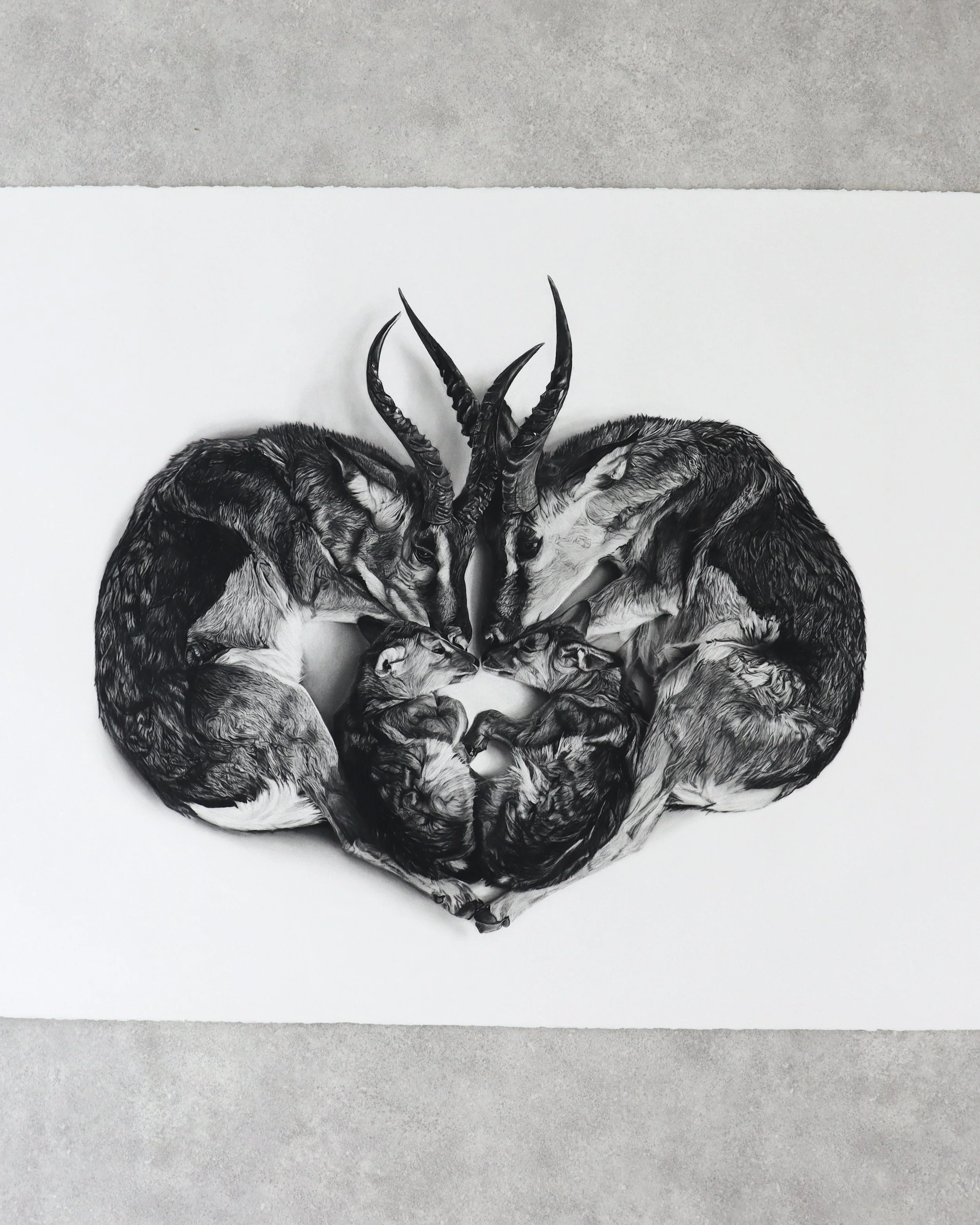
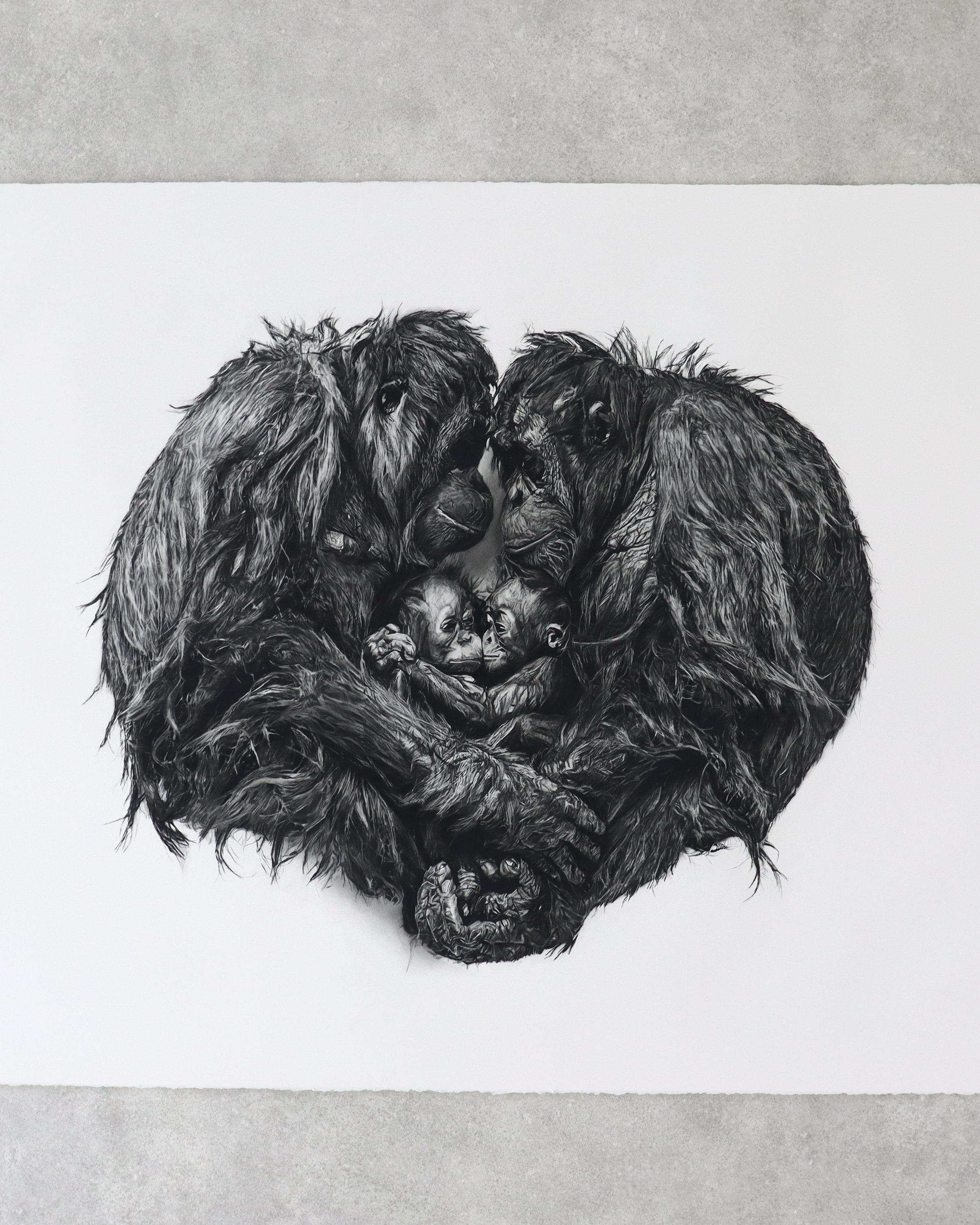
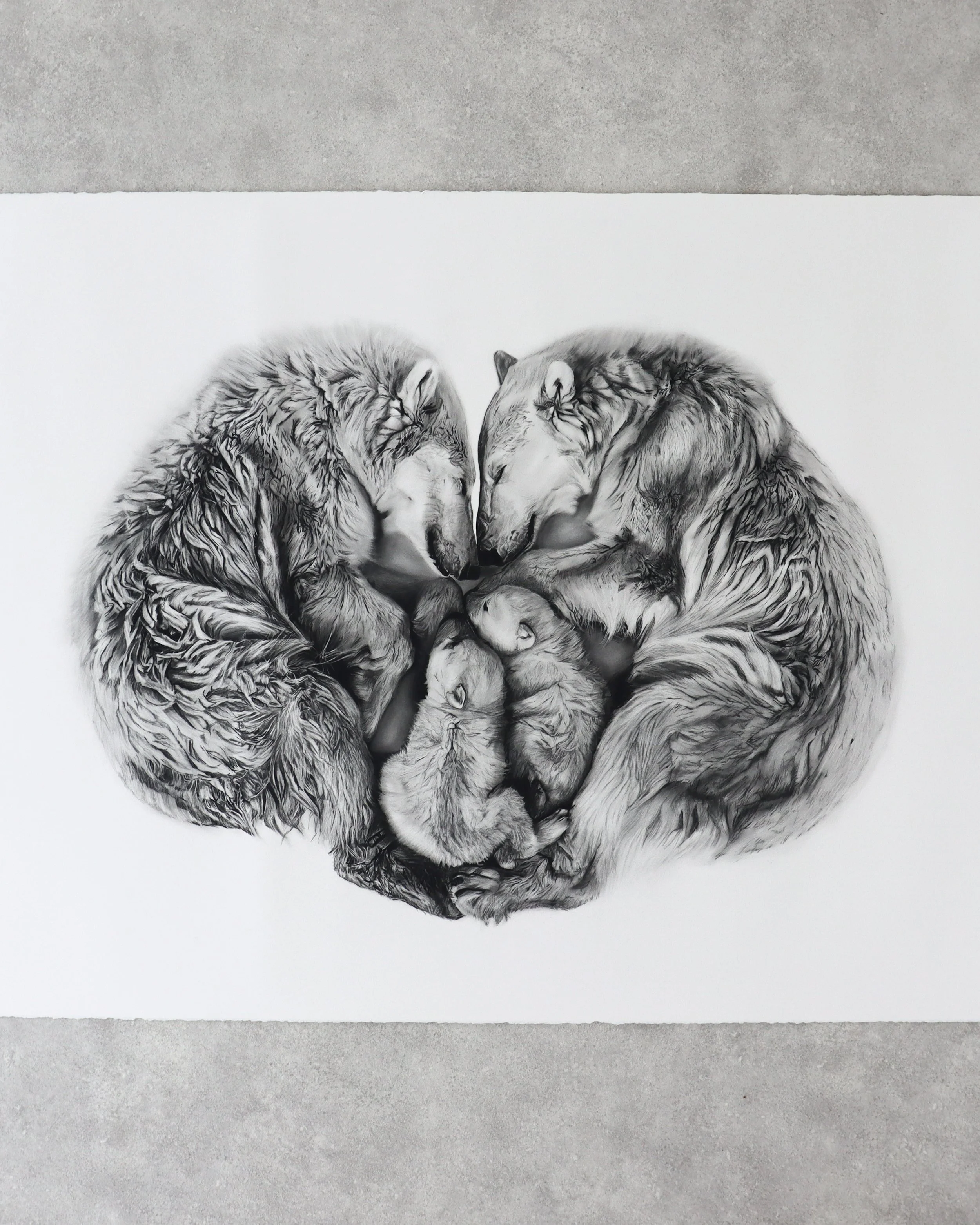
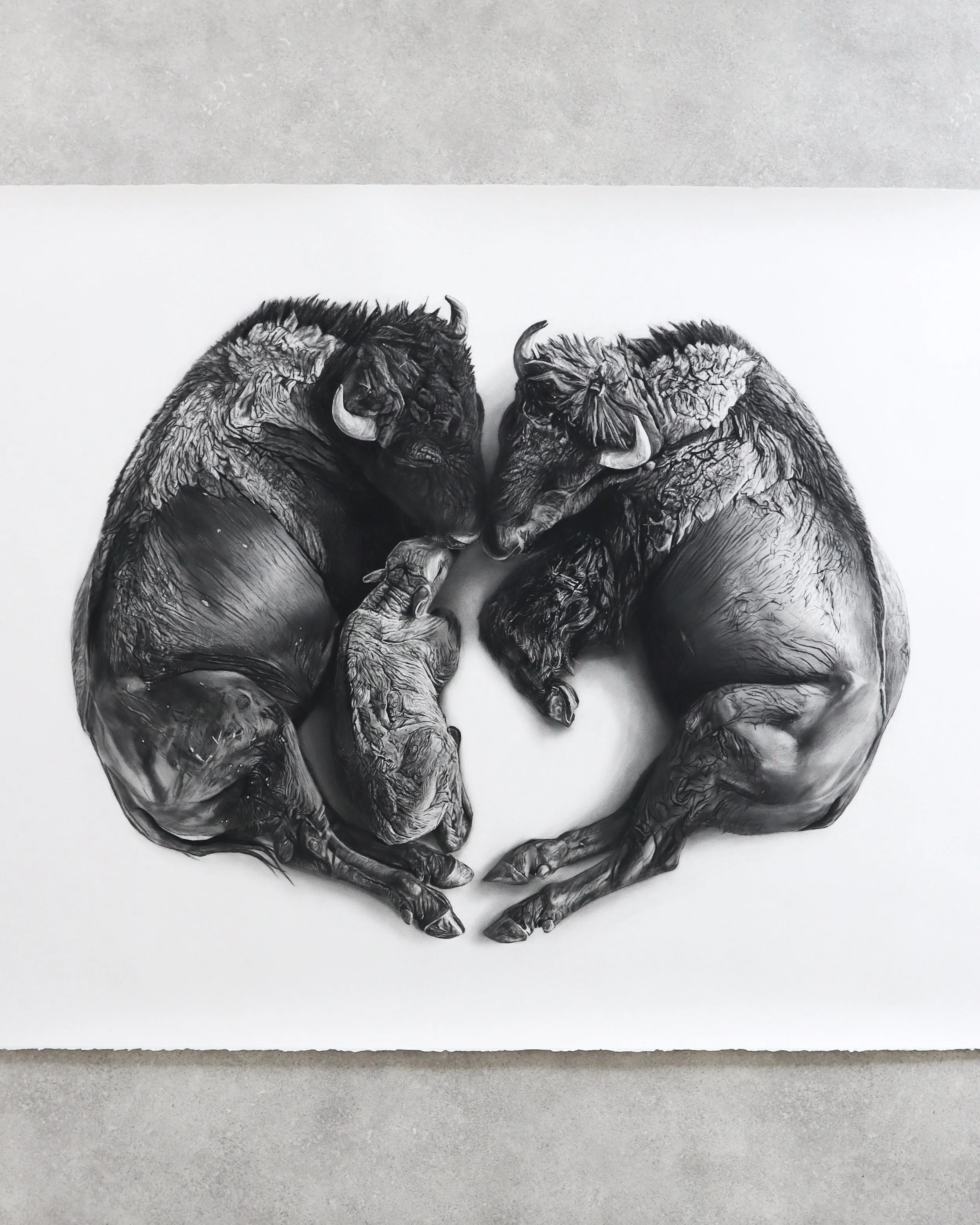
A series of 15 museum-scale charcoal works exploring connection, protection and belonging through the relationships between animals.
The Collection
Fifteen works. One continuing study of connection.
Wild Hearts is an evolving series of museum-scale charcoal works exploring family, protection and belonging through the natural world.
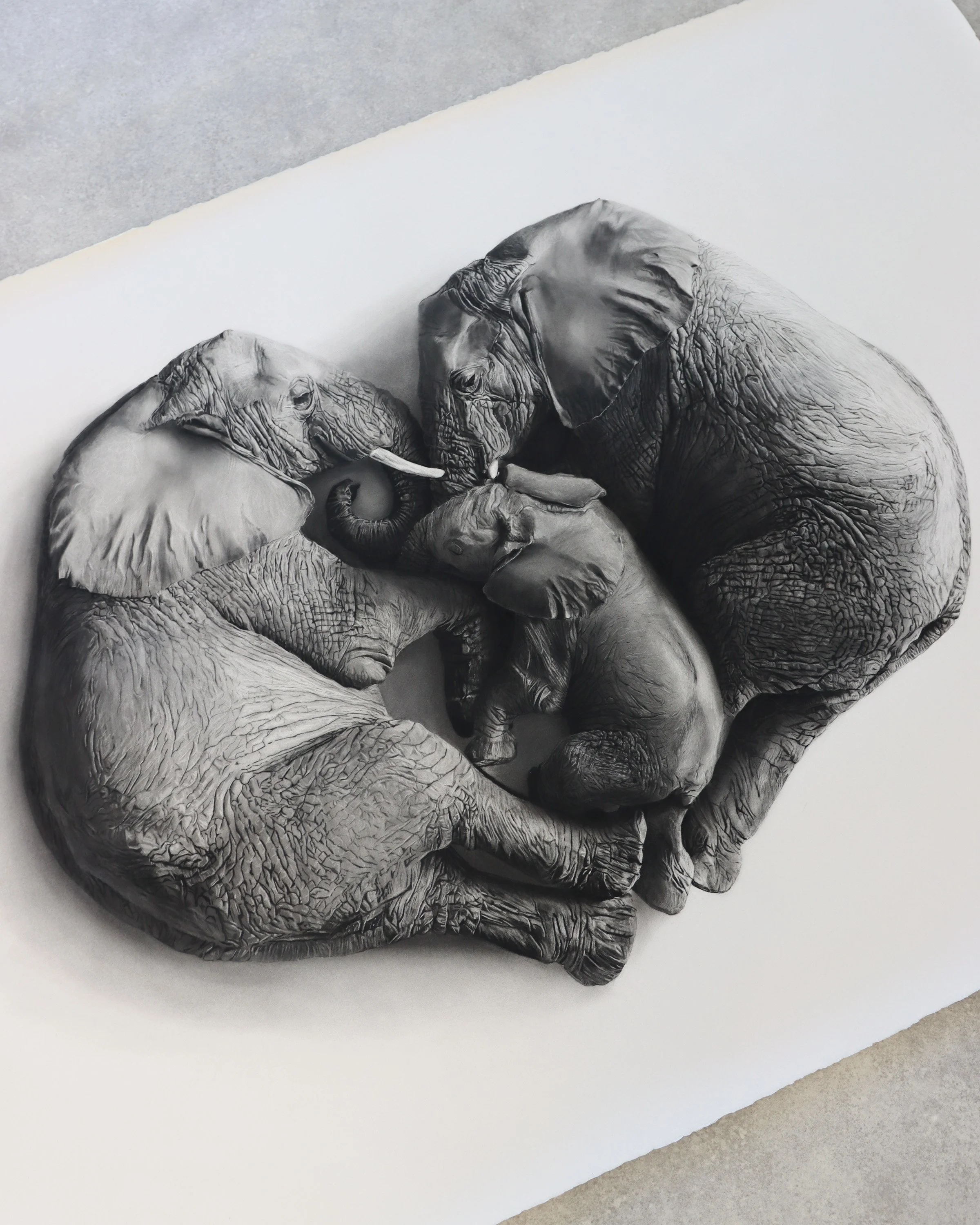
Each composition brings individual bodies together to create a larger form.
Bodies become architecture.
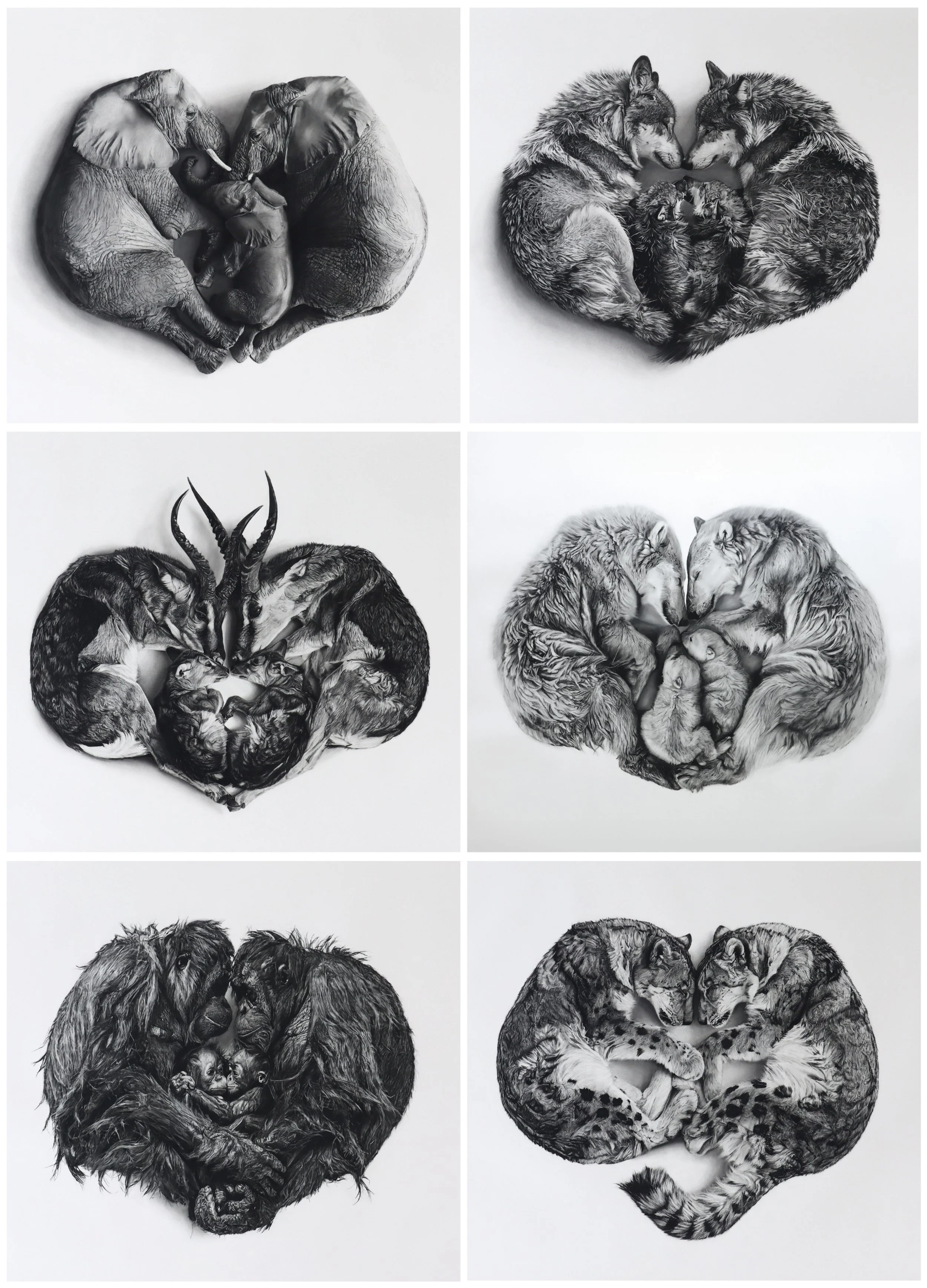
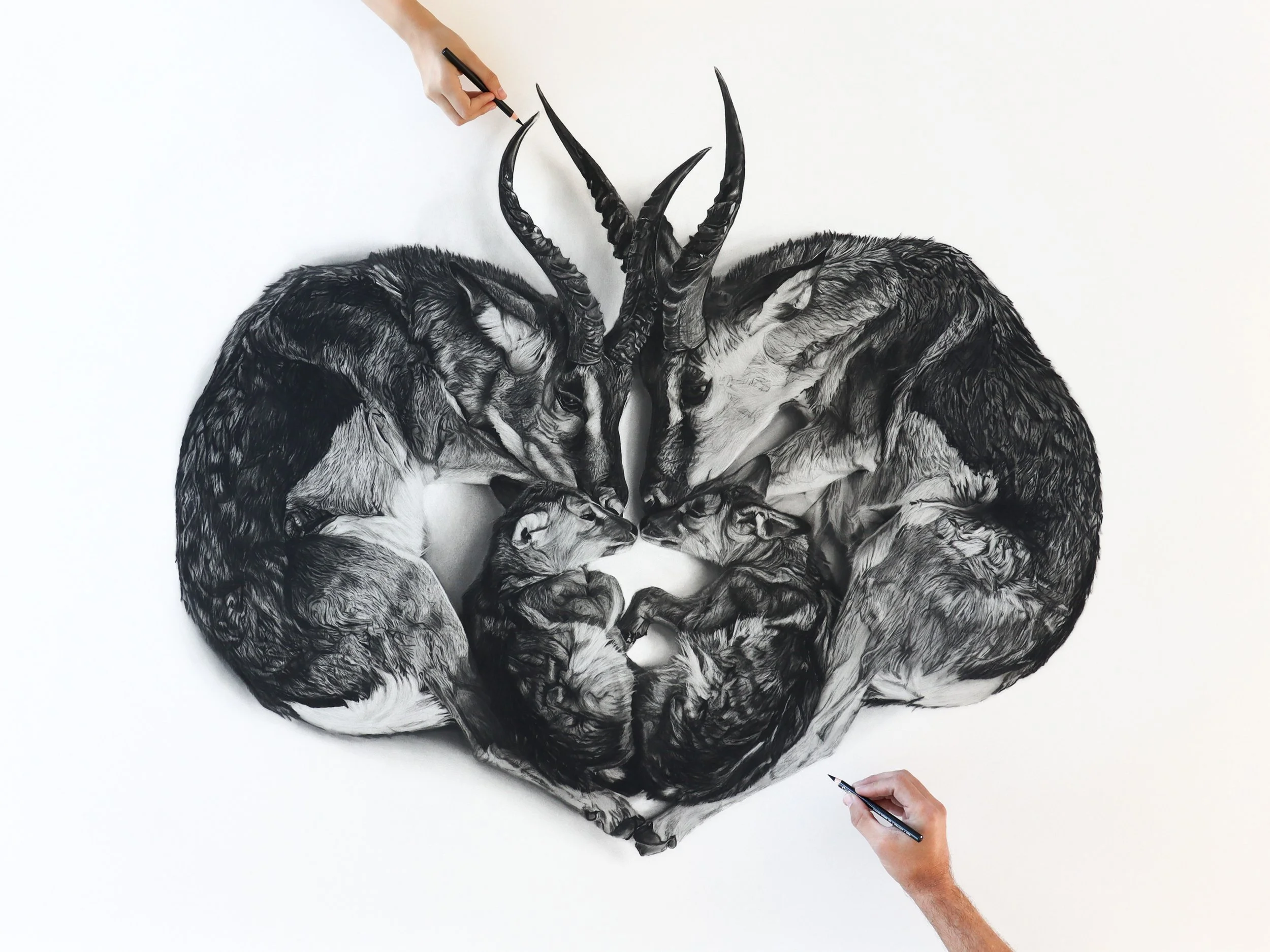
The Heart is not drawn. It emerges
A curve becomes shelter.
A body becomes structure.
Proximity becomes connection.
Within each composition, individual animals remain recognisable, yet together they become something larger.
The relationship becomes the form.
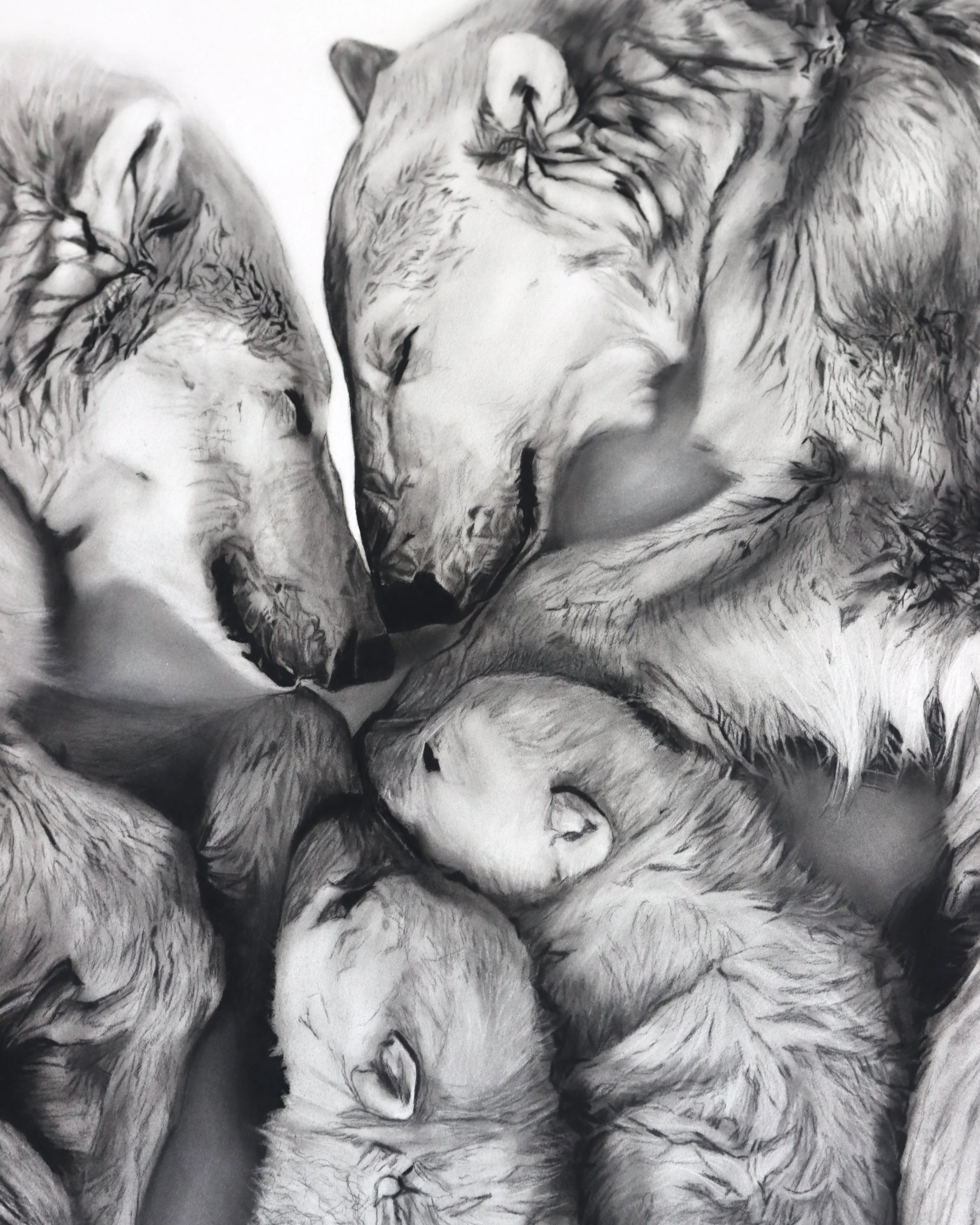
Made at scale
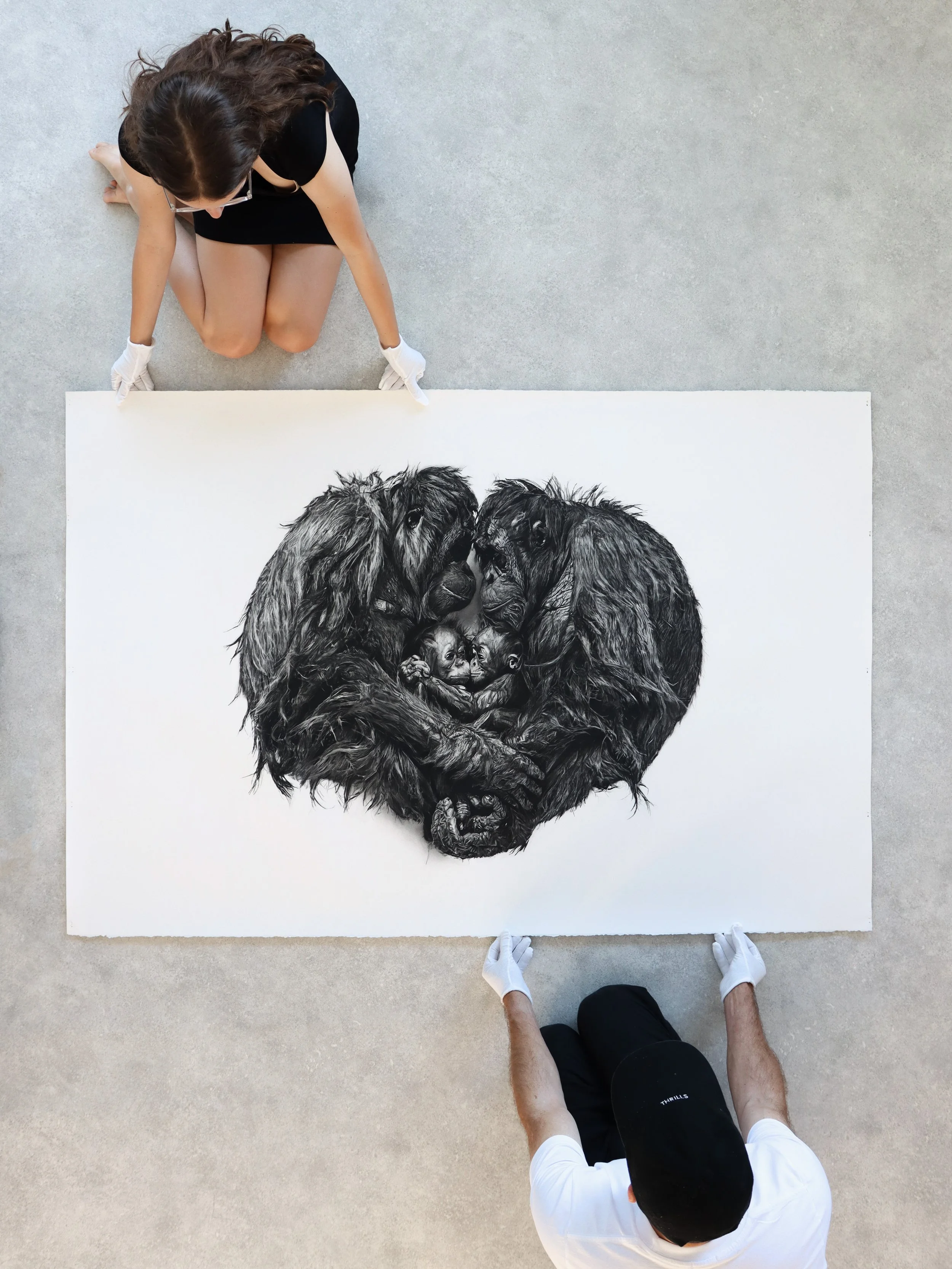
Each Wild Hearts original is created at 160 × 113 cm.
At a distance, the drawing resolves into a single monumental form.
Closer, it breaks apart into thousands of individual marks, textures and shifts in tone.
Scale changes the way the work is seen.
From image to presence.
From detail to whole.
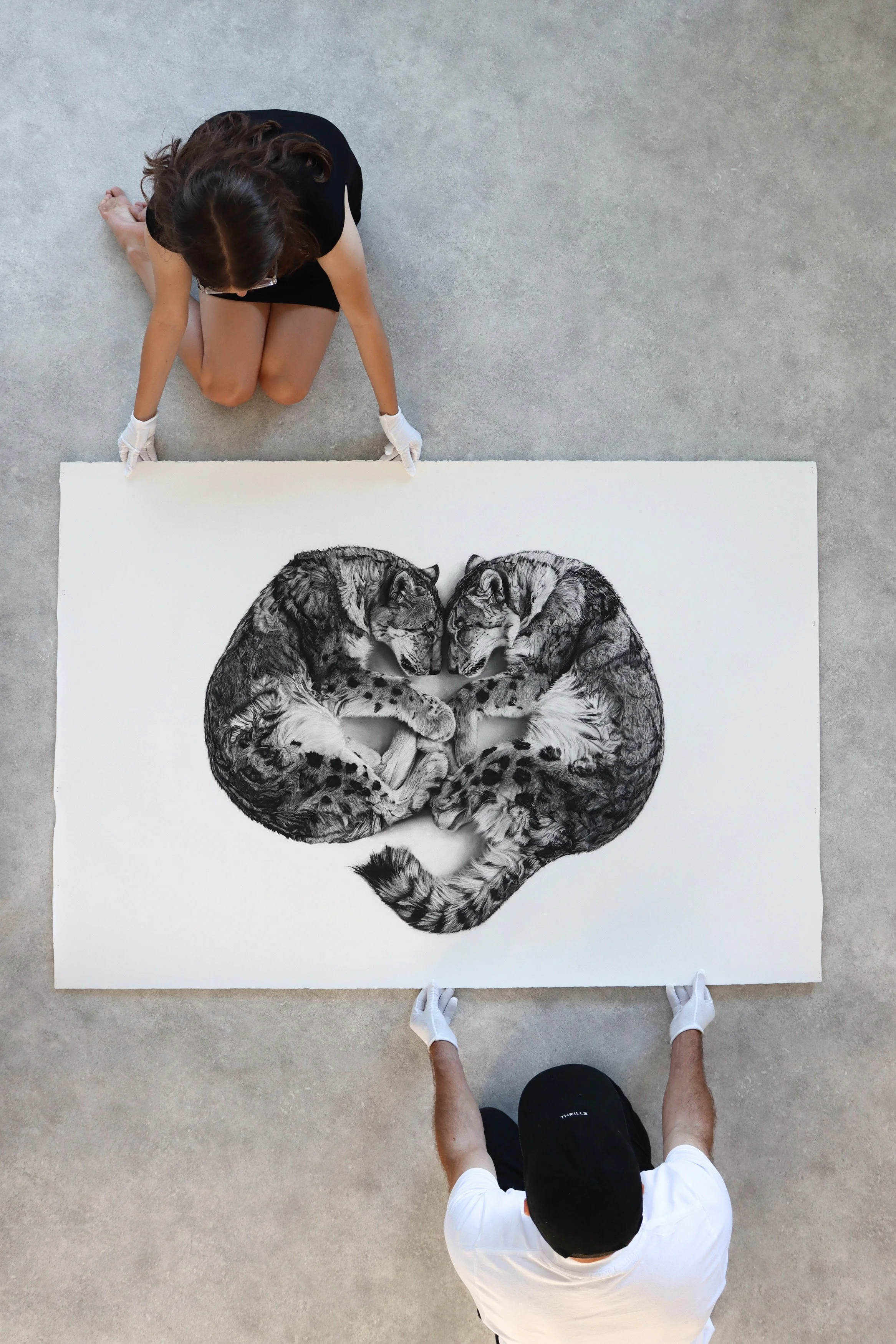
Mark by Mark
Up close, the image gives way to the mark.
Charcoal is layered, lifted and worked back into the surface — building fur, form and depth one mark at a time.
What appears photographic from a distance reveals itself as something entirely handmade.
Thousands of marks. One whole.
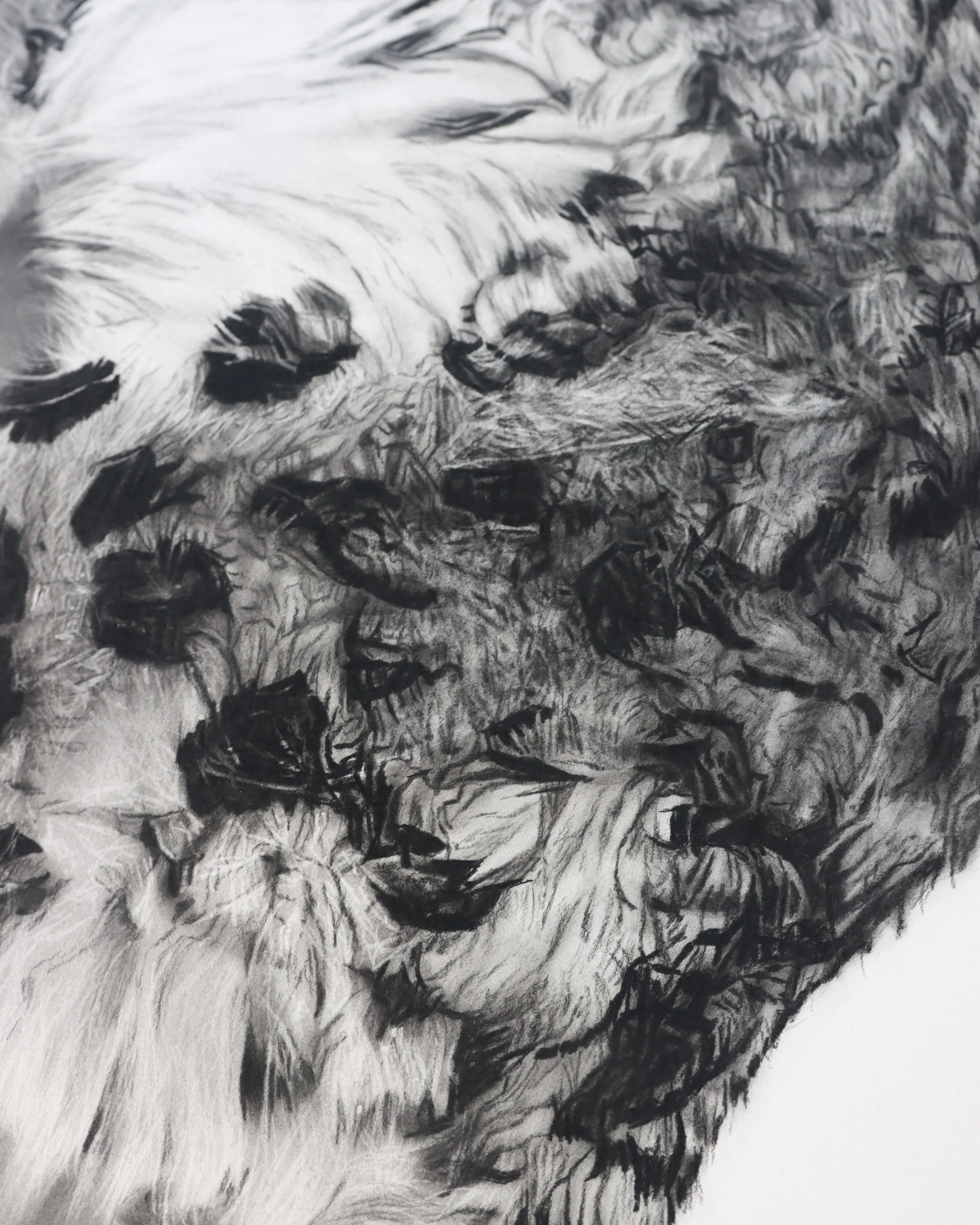
Sculptural Presence
Though created entirely in charcoal, the works are conceived to hold the presence of objects.
Mass, shadow, texture and light give the forms weight.
Charcoal becomes volume.
The drawing becomes something to encounter, not simply something to look at.
The Hand
Every mark is made by hand.
The works are built slowly through layers of charcoal, erasure, tone and texture — allowing the form to emerge without visual excess.
There is no colour to distract from the mark.
No unnecessary detail.
Only what the work needs.
Material
Charcoal. Cotton. Time.
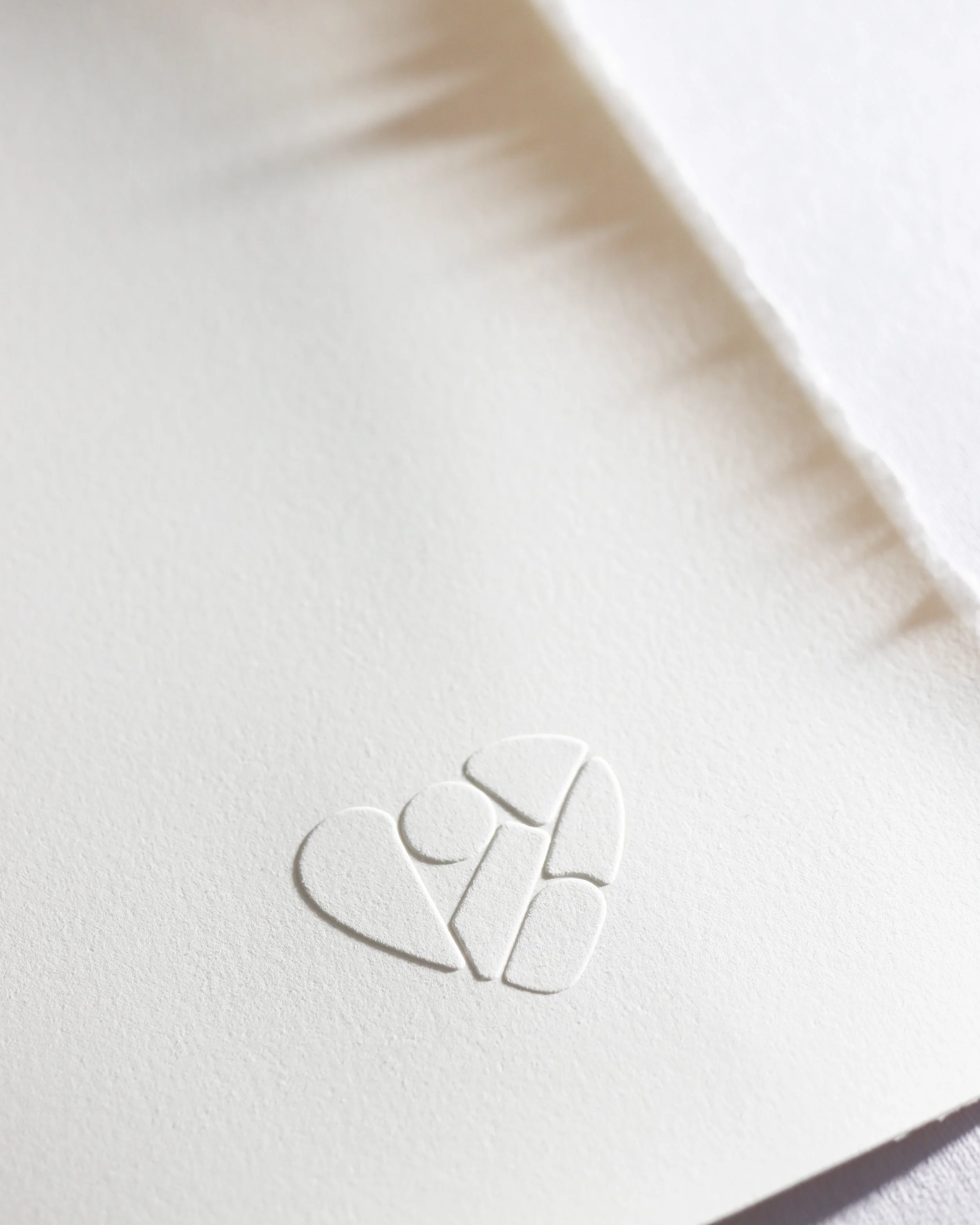
Each original is drawn in charcoal on Archers Aquarelle French cotton paper, selected for its ability to hold the finest marks and subtle tonal shifts demanded by the work.
The paper remains part of the composition.
Its white space gives the forms room to breathe.
Its surface records the hand.
One practice. Two hands
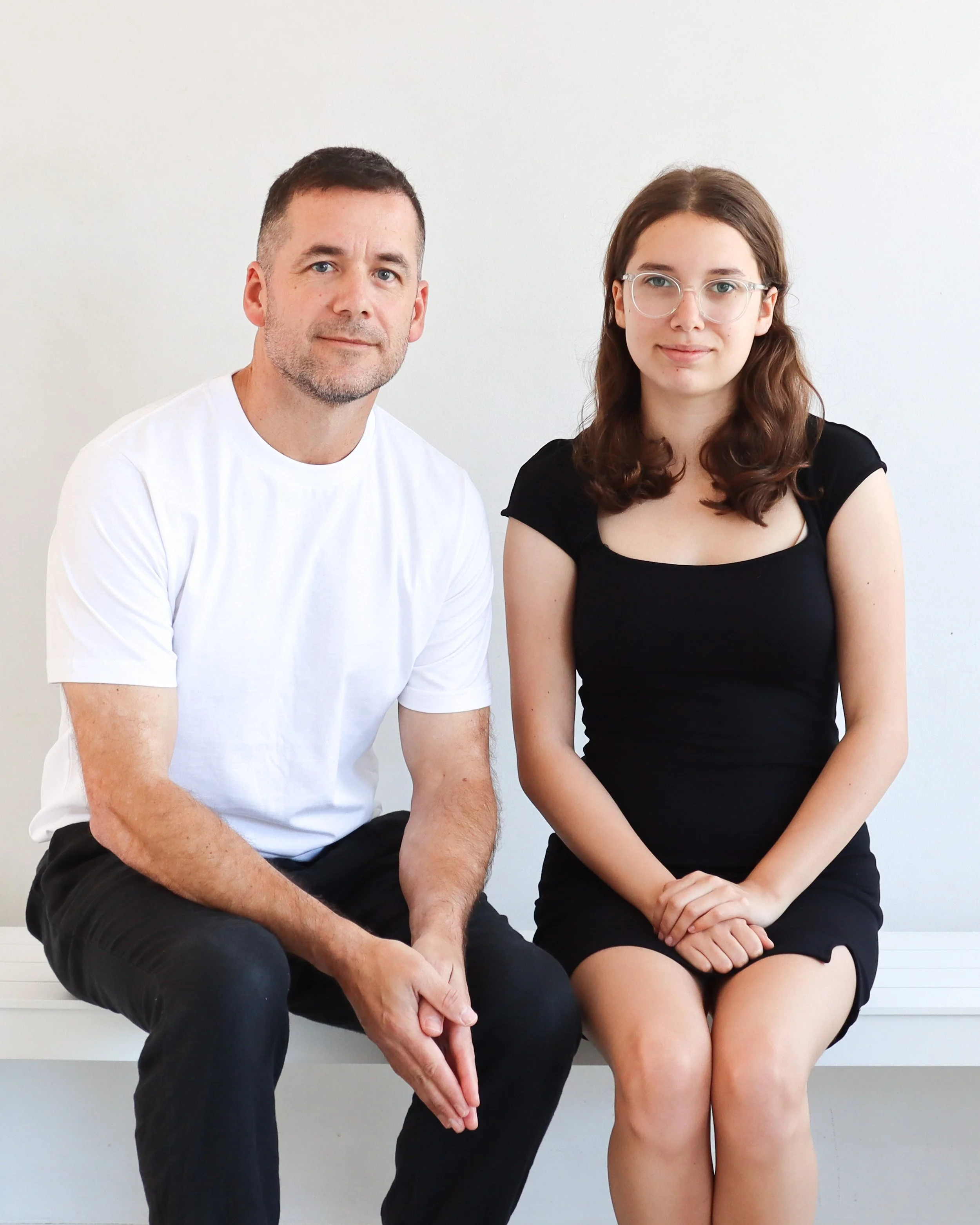
Wild Hearts is created by Rob Harris and Georgia Harris through a shared studio practice.
Together, they develop each composition through the relationship between bodies, space and form, building each work slowly in charcoal until the individual animals become something larger.
Each original is created by Rob Harris with a direct contribution from Georgia Harris.
Made to be collected
Each Wild Hearts original is unique.
Limited editions are produced with the same attention to material, scale and presentation, and are released in strictly limited numbers.
Every work is signed by both artists and accompanied by its collector documentation.
The Process
From idea to physical presence.
Explore how each Wild Hearts work moves from concept to hand-drawn original