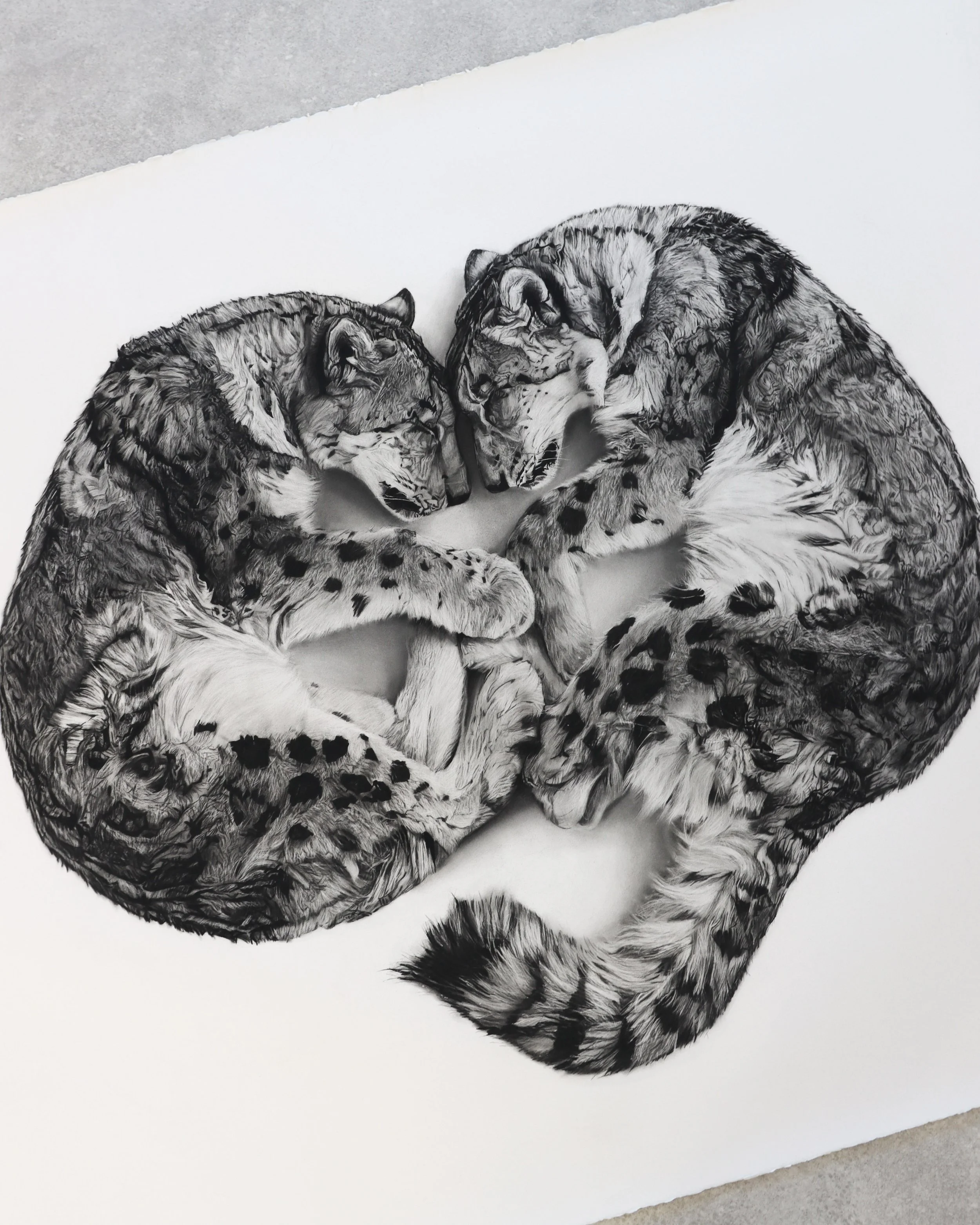
Why animals, not people?
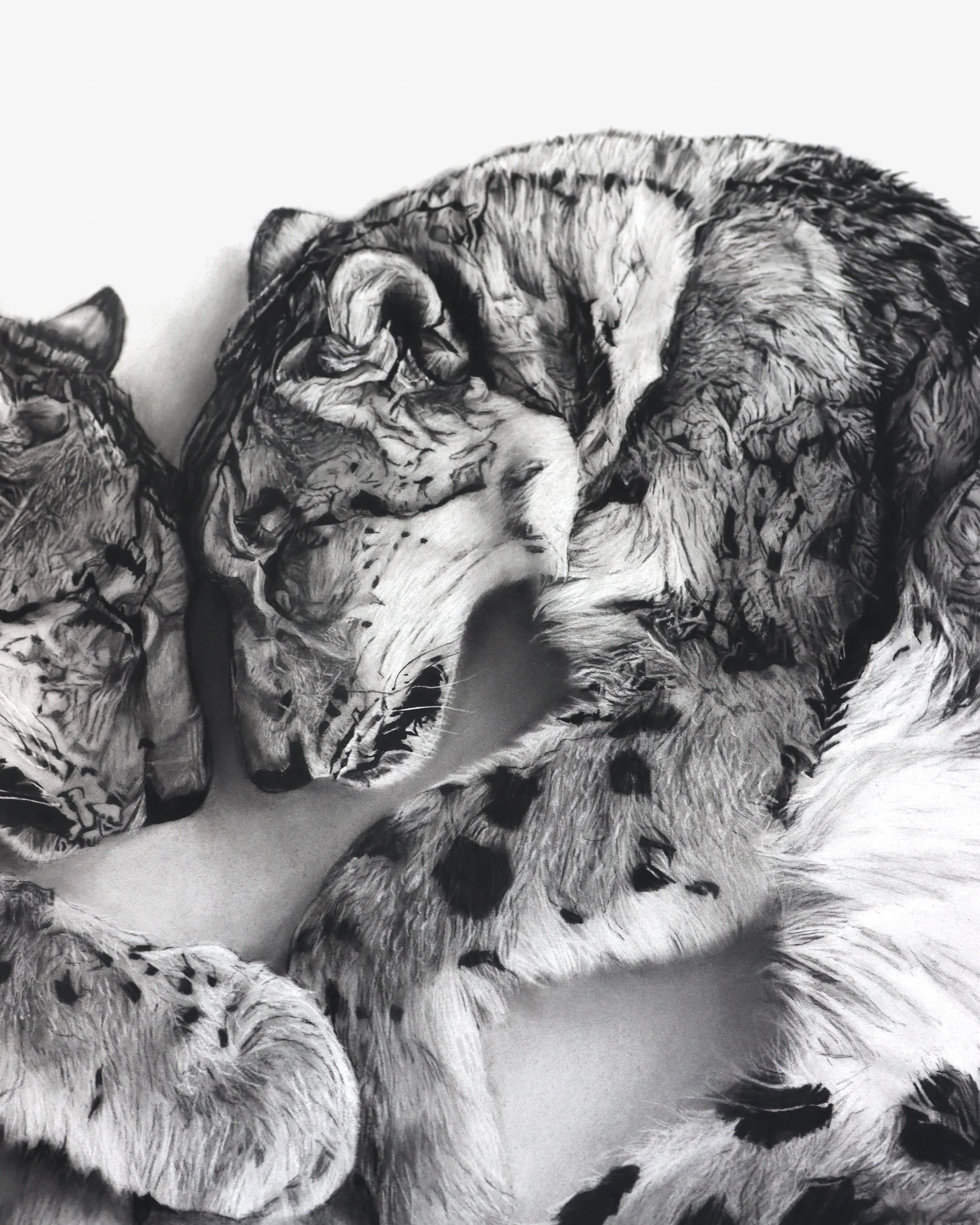
I grew up in South Africa, where wildlife was part of the landscape and the visual world around me.
I’ve always been drawn to animals, but over time my interest has shifted.
It is less about the individual animal and more about what happens when animals come together.
The way they gather.
The way they protect their young.
The way one body moves around another.
The way a group can become something greater than the individual forms within it.
That relationship is what interests me.
And it became central to Wild Hearts.
I could have explored those ideas through people. But animals allow me to look at connection, protection and belonging without imposing a human story onto the work.
When we see people together, we instinctively start asking questions.
Who are they?
What is their relationship?
What has happened between them?
We bring a story with us.
Animals create a different kind of space.
A mother protecting her young needs no explanation. Two animals moving towards one another can communicate closeness without expression or words. A group gathered around a smaller body can suggest protection immediately.
The relationship itself carries the meaning.
That is what I find so compelling.
Looking beyond the individual
Wildlife is often photographed or represented as an individual subject.
A lion.
An elephant.
A wolf.
I am interested in what happens when we stop looking at the animal on its own and start looking at the space between them.
Their bodies interact through proximity, balance and movement. One form can overlap another, creating new shapes and relationships within the composition.
This changes the way I think about the drawing.
The animal is still important. I want the anatomy, texture and character to be observed with as much precision as possible.
But the individual is no longer the whole subject.
The relationship becomes part of the subject too.
Connection without a human story
There is something universal in that.
We understand protection.
We understand closeness.
We understand the instinct to gather around those we care about.
The animals don’t need to represent people for us to recognise those things.
They simply reveal them through their own behaviour.
That gives the viewer room to bring their own experience to the work.
There is no particular family to identify with. No human narrative to follow.
Just a group of living forms, connected by proximity, instinct and care.
From relationship to form
This is where the idea of Wild Hearts begins to take shape.
When animals come together, their bodies create forms that would not exist individually.
A trunk curves around another body.
A head rests against another.
Fur follows the contour of fur.
Limbs fold into the space between them.
The individual forms remain recognisable, but together they become something larger.
The animals become architecture.
And the relationship between them becomes the structure.
That is what keeps bringing me back to animals.
They allow me to explore something deeply human without having to draw a human being.
The animals remain themselves.
But through their relationships, we recognise something of ourselves.